

Moe’s Group LLC is a private label perfume oil manufacturer in Chatsworth, California: we formulate, fill and label perfume oils and scented body oils for beauty brands at our FDA-registered facility. Perfume oil is fragrance in a skin-safe carrier oil instead of alcohol, so it needs no alcohol permit. The minimum order is custom private label from 1,000 units; white label from 200 units where a ready formula exists. Roll-on, solid perfume and alcohol-free body and hair mists are also covered here, confirmed format by format in your quote. Our ISO 22716, ISO 9001 and ISO 45001 certificates and their scope are on the certifications page.
Last updated: October 2026
| Perfume oil and body mist manufacturing at a glance | Detail |
|---|---|
| Manufacturer | Moe’s Group LLC |
| Facility | 9743 Independence Ave, Chatsworth, CA 91311 (Los Angeles) |
| Products | Perfume oil and scented body oil, without alcohol |
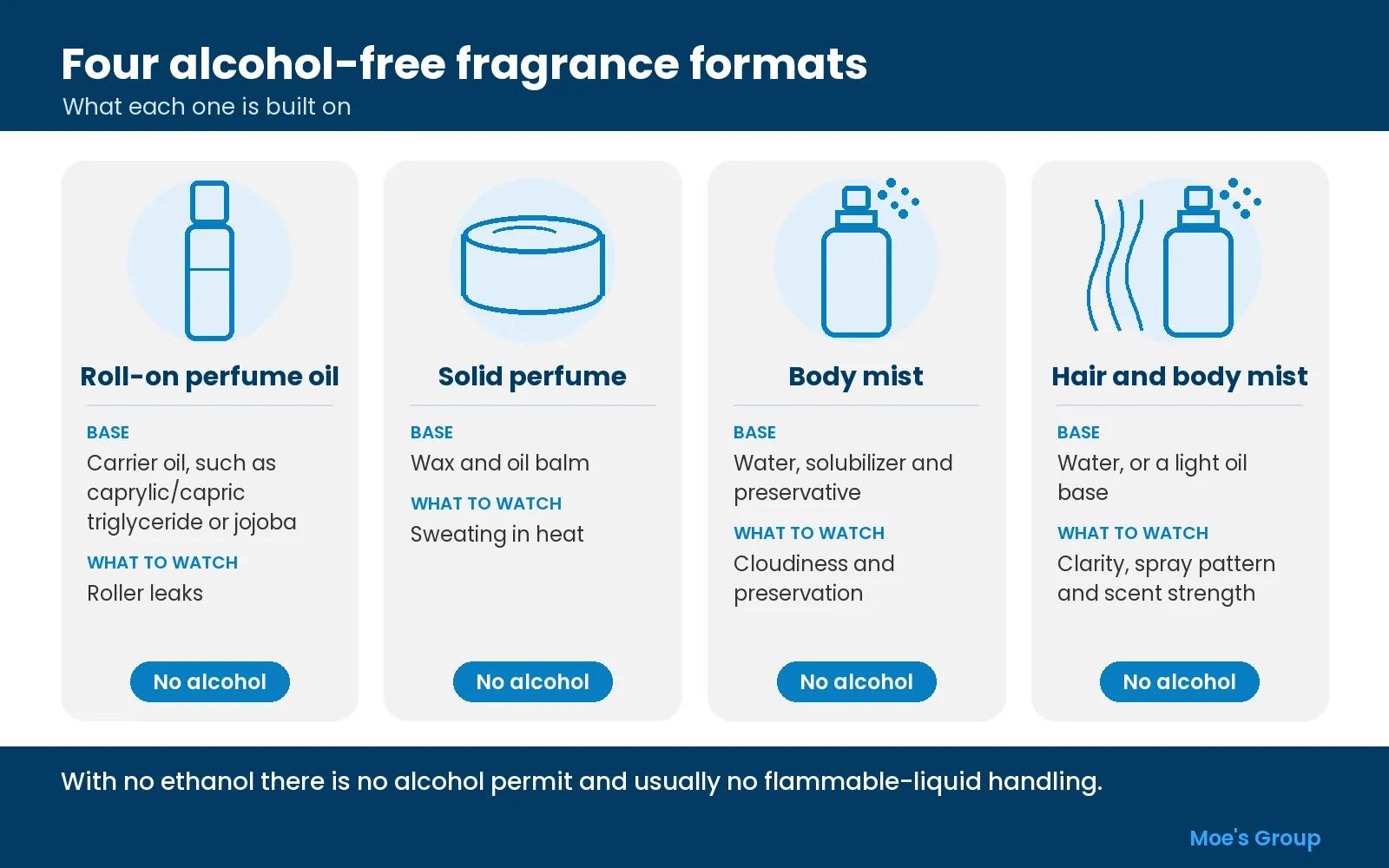
| Formats | Roll-on, solid perfume, alcohol-free body and hair mists, confirmed in your quote |
| Service models | Custom private label; white label where a ready formula exists |
| Minimum order | custom private label from 1,000 units; white label from 200 units where a ready formula exists |
| Fragrance | Sourced to your brief; ask for the supplier’s IFRA certificate |
| Formulation | In house, by our own chemists |
| Filling and labelling | In house, in Chatsworth |
| Quality | FDA-registered facility; ISO certificates and their scope on the certifications page |
| Contact | +1 (866) 777-6751 or the Request for Quote form |
What is perfume oil?
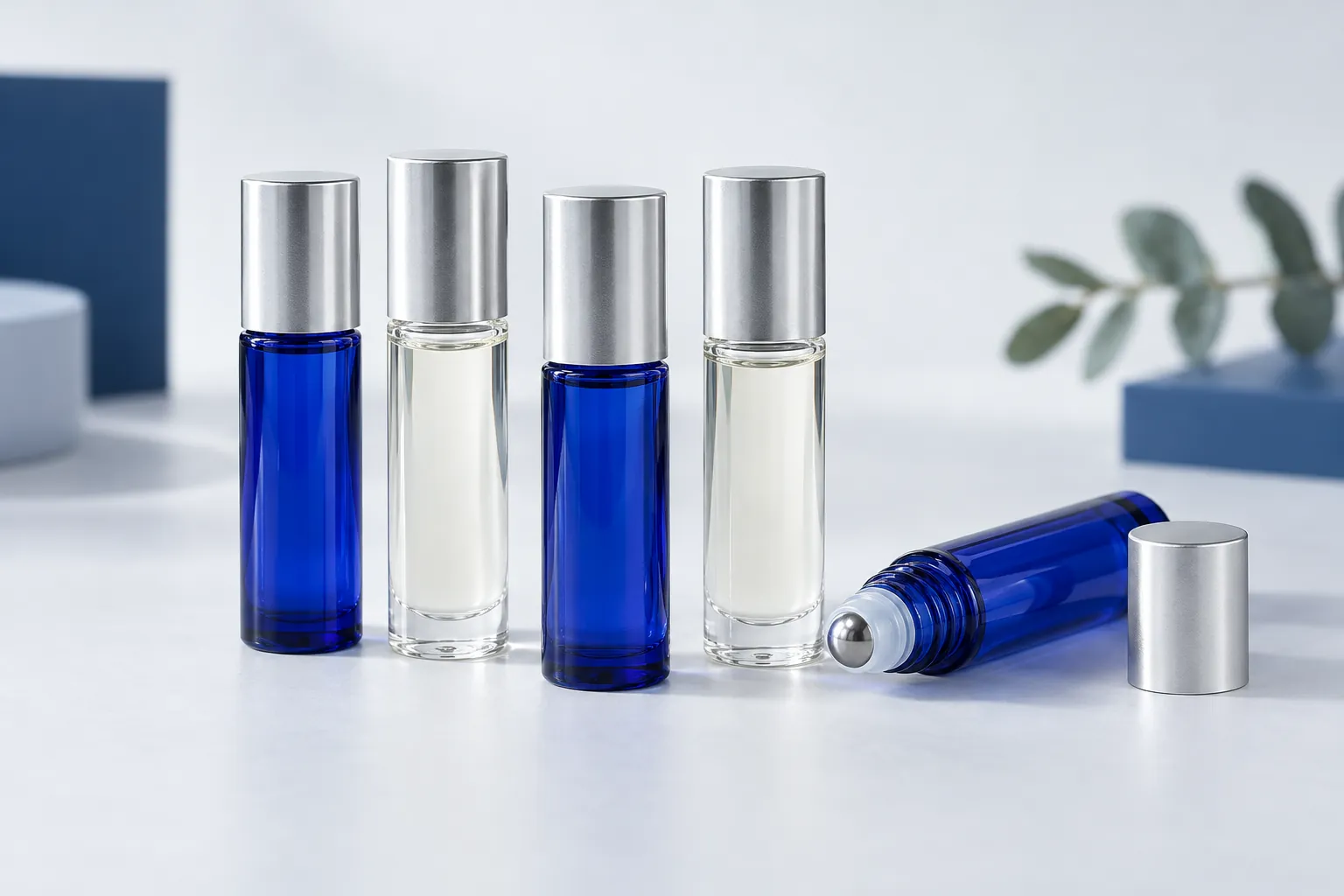
Perfume oil is a finished fragrance in which perfume concentrate is diluted in a skin-safe carrier oil, such as caprylic/capric triglyceride or jojoba, instead of alcohol. It is usually sold in a 5-10 mL glass roller bottle and wears closer to the skin than an alcohol spray. With no ethanol there is no alcohol permit and usually no flammable-liquid handling.
Is perfume oil the same as fragrance oil?
No. Fragrance oil is the concentrated scent a fragrance house supplies; perfume oil is the finished product, that fragrance diluted in a carrier oil within its IFRA limit for skin contact. Suppliers often use the two terms loosely, and fragrance oils sold for candles and soap are not always made for skin.
Where does the fragrance come from?
We source it to your brief: a mood, a set of notes or a fragrance you already own. Each fragrance should come with the supplier’s IFRA conformity certificate for your product category and use level, so ask for it before you approve a scent. Judge a scent on smelling strips, then in a trial batch, because the same fragrance smells different in oil, wax and water.
One caution: a product that uses another brand’s name, bottle shape or trade dress, or calls itself a dupe of a named designer fragrance, invites a trademark dispute.
What goes wrong with perfume oils and mists, and how is it avoided?
Most failures are packaging and stability problems that show up weeks after filling:
- Leaking rollers. The roller fitment must match the bottle neck and the oil, so test-fill your components before production.
- Fragrance attacking plastic. Citrus and some woody materials swell certain plastics; check caps, rollers and sprayers in a compatibility test.
- Colour change. Vanillin can turn a formula brown; plan tinted or opaque packaging for vanilla-heavy scents.
- Rancid oil. Carrier oils oxidize; stable carriers and an antioxidant such as tocopherol help.
- Citrus on sun-exposed skin. IFRA restricts some citrus oils in leave-on products because of phototoxicity.
How does perfume oil compare with alcohol perfume and body mist?
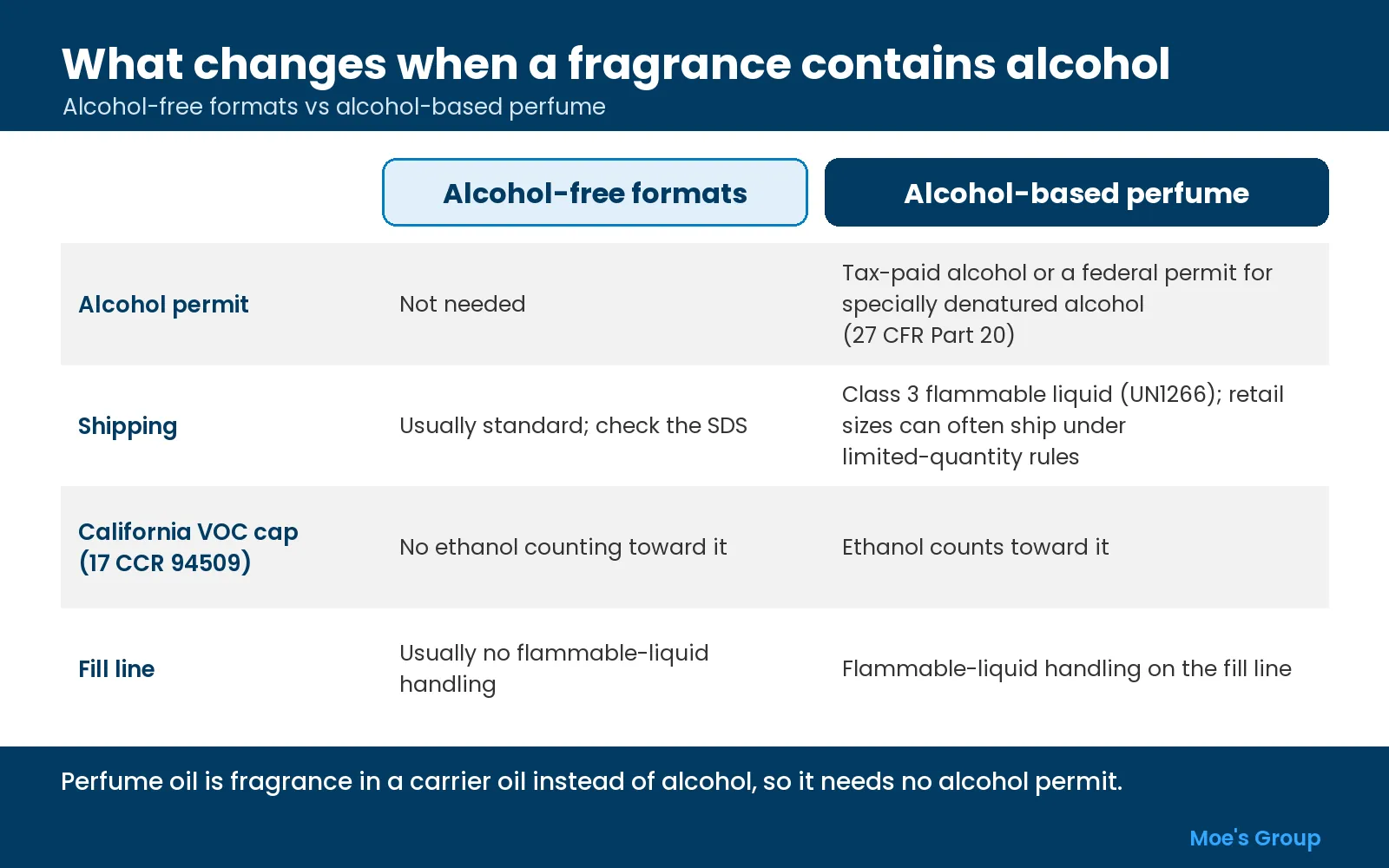
The base decides almost everything else. A fragrance made with ethanol needs tax-paid alcohol or a federal permit for specially denatured alcohol (27 CFR Part 20) and flammable-liquid handling on the fill line. The Hazardous Materials Table (49 CFR 172.101) lists Perfumery products with flammable solvents as Class 3, UN1266, though retail sizes can often ship under limited-quantity rules. In California, CARB caps the VOC content of personal fragrance products (17 CCR 94509), and ethanol counts toward it. Fragrance loads below are typical market ranges, not Moe’s Group specifications; each fragrance’s IFRA limit is the ceiling.
| Roll-on perfume oil | Solid perfume | Alcohol-free body mist | Alcohol-based perfume | |
|---|---|---|---|---|
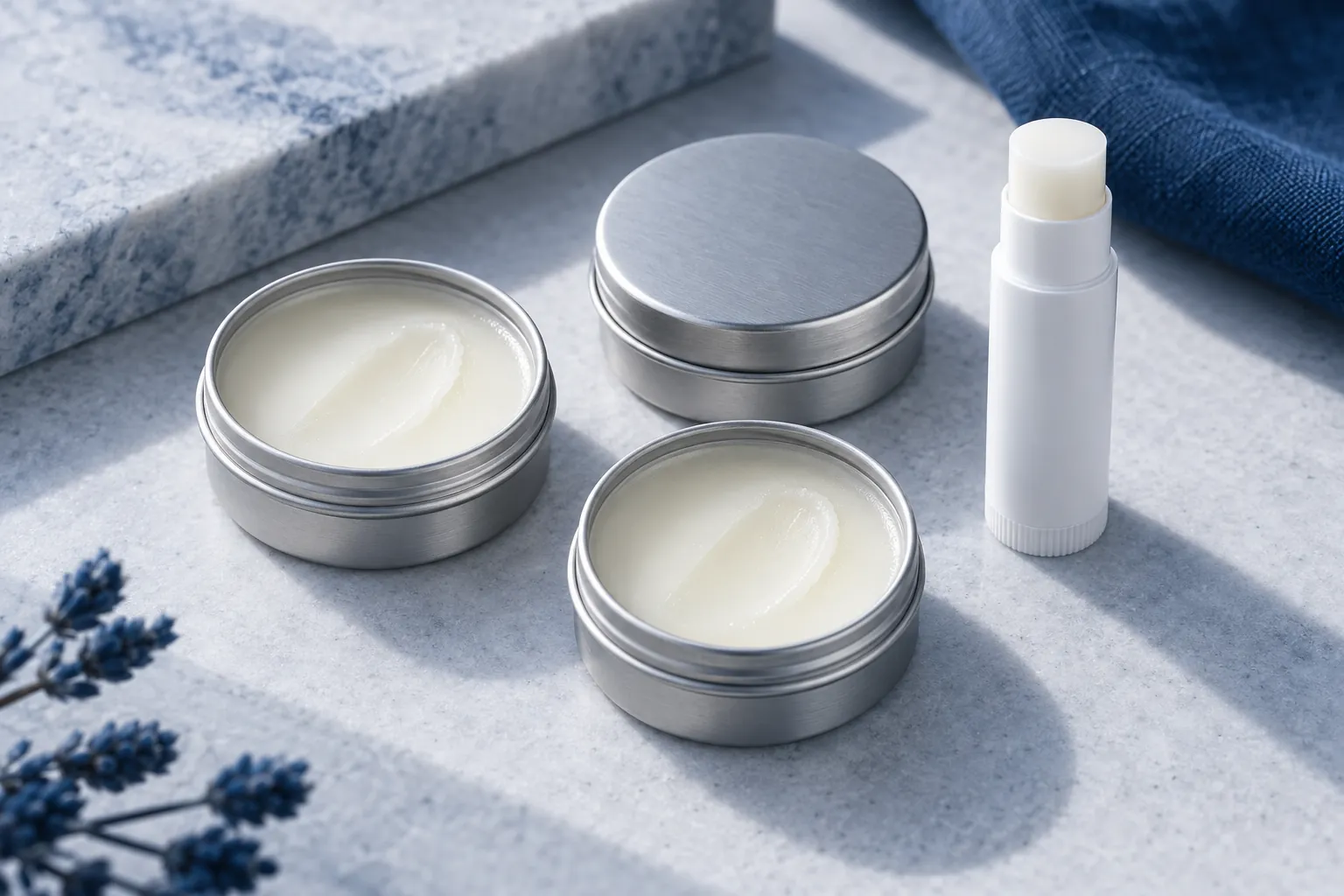
| Base | Carrier oil | Wax and oil balm | Water, solubilizer, preservative | Ethanol and water |
| Typical fragrance load | High; often 15-30% | Medium to high | Low; often 1-5% | Set by the concentration |
| Common packaging | 5-10 mL glass roller | Tin, compact or stick | Fine-mist spray, often 3-8 fl oz | Glass spray bottle |
| Alcohol permit | Not needed | Not needed | Not needed | Tax-paid alcohol or SDA permit |
| Shipping | Usually standard; check the SDS | Usually standard; check the SDS | Standard | Class 3 flammable liquid (UN1266) |
| What to watch | Roller leaks | Sweating in heat | Cloudiness and preservation | Flammability and the VOC limit |
What does the market data say about perfume oil and body mist?
Scent now sells body care. NielsenIQ measured scented body care up 13.7% against 5.8% for unscented in the 52 weeks to June 13, 2026, and Circana reported mass-market fragrance sales up 15% in the first half of 2026. US Google searches for alcohol-free perfume oil ran at a median of about 22,200 a month over the 12 months to September 2026, peaking at 49,500 in October and November 2025, and roll-on perfume oil drew about 2,900 (Keywords Everywhere). On Amazon US, body mist searches rose from 54,162 in September 2025 to 66,631 in September 2026 (VOC.ai).
Single notes rotate: Amazon searches for vanilla perfume fell 31% over the same year. So build a scent you can carry across a line: a roll-on, a mist, a body wash, a body lotion and a whipped body butter, each at its own fragrance level and IFRA check.
What can a perfume oil or body mist claim?
Scent and feel claims are cosmetic; mood, sleep or body claims make the product a drug. FDA’s aromatherapy guidance treats relieving anxiety, helping you sleep or relaxing muscles as drug claims. Perfumes and body mists are not approved by the FDA before sale, and the brand is responsible for safety, labelling and claims; see our guide to cosmetic or drug claims for body products.
| Can say (with substantiation on the finished product) | Cannot say (drug claim or unsupported) |
|---|---|
| Leaves skin lightly scented; a soft, close-to-skin scent | Relieves anxiety or stress; calms the mind |
| Alcohol-free; oil-based | Helps you sleep; relaxes muscles |
| Softens and moisturizes skin (scented body oil) | Claims about eczema, dermatitis or other skin conditions |
| Made with essential oils (if they are in the formula) | Aromatherapy that improves health or mood |
| Long-wearing scent (if wear testing supports it) | Pheromone or attraction claims |
| Fragrance conforms to IFRA standards (with the supplier’s certificate) | Approved by the FDA; hypoallergenic without testing |
- Ingredient list. The fragrance blend can be declared as Fragrance (21 CFR 701.3).
- MoCRA. The brand lists each product with the FDA (unless exempt as a small business), keeps safety substantiation and reports serious adverse events.
- Fragrance allergens. The FDA missed MoCRA’s June 29, 2024 deadline to propose a rule naming them, and as of October 2026 no proposed rule has been published; the Unified Agenda (RIN 0910-AI90) targets November 2026. See our note on the fragrance allergen gap.
- IFRA standards. Voluntary in the US. The 51st Amendment is in force; IFRA expects to notify the 52nd in January 2027.
- California. SB 312 requires manufacturers already reporting to the California Safe Cosmetics Program (one million dollars or more in annual cosmetics sales) to report certain fragrance ingredients (Health and Safety Code 111792.6).
Which perfume oil and body mist formats can Moe’s Group make?
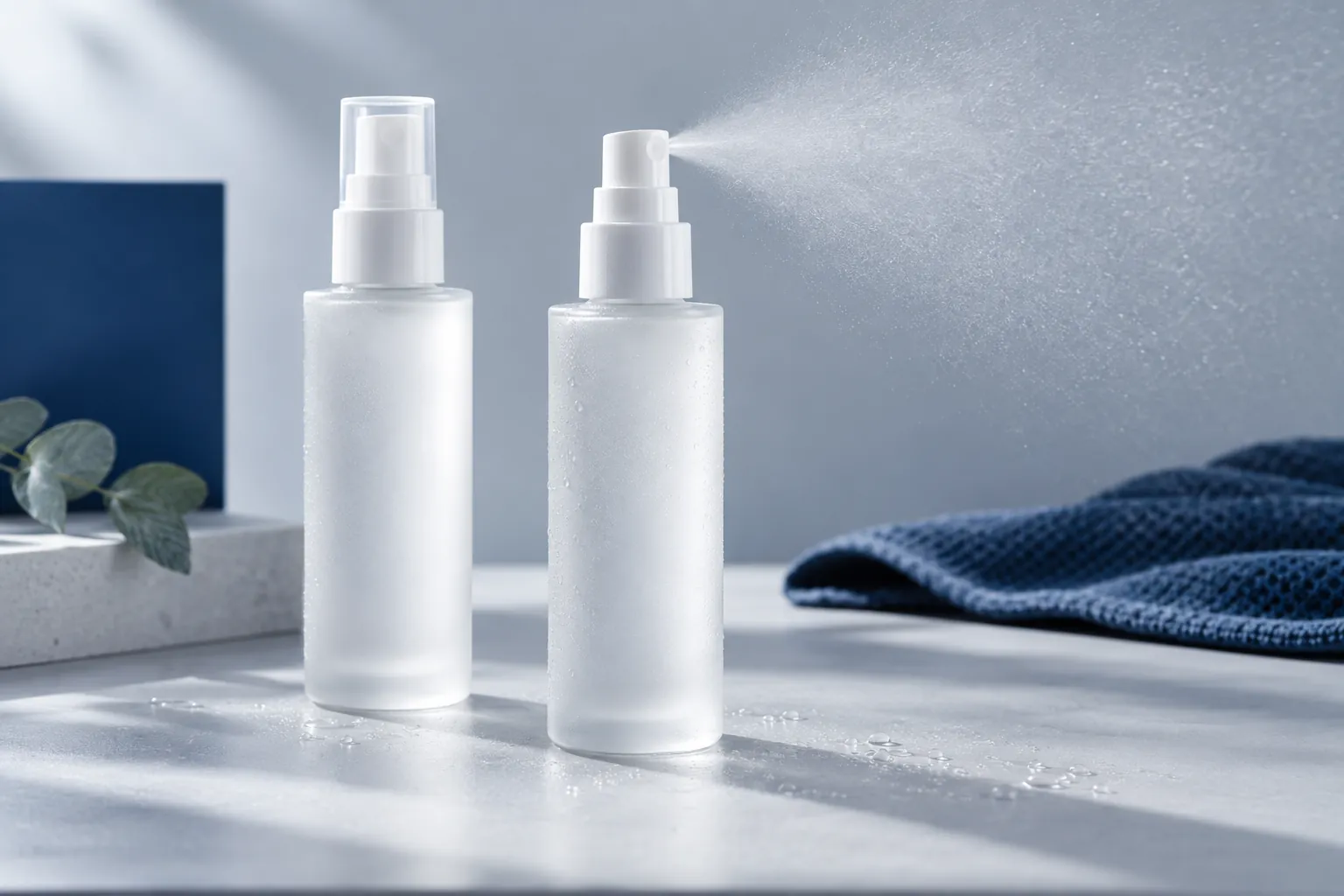
Perfume oil and scented body oil are oil fills, like the body oils we already make, and we formulate, fill and label them in house. Roll-on, solid perfume and alcohol-free body and hair mists depend on your components, so format, fill and packaging are confirmed in your quote; our packaging page covers bottle and closure options. A mist is mostly water with a solubilizer, a preservative and often glycerin, and a hair and body mist may use a light oil base. It should be tested for clarity, spray pattern and scent strength together, and a water-based mist needs preservative-efficacy (challenge) testing. For a classic alcohol spray, ask us first and we will tell you plainly what we can quote.
How does a perfume oil project work at Moe’s Group?
It runs in five steps, from brief to filled and labelled product, all at our facility in Chatsworth, California.
- Send your brief. Format, scent direction, packaging, price point and volume, through the Request for Quote form.
- Choose the scent. We source fragrance options to your brief for you to smell; ask for the IFRA certificate for each one.
- Formulation and trial batches. Our chemists put the chosen fragrance into your base and adjust the load; you approve the sample.
- Stability and compatibility. The formula should be checked in your actual bottles, rollers or tins before production; the testing is agreed in your quote.
- Production. Filling and labelling run in house in Chatsworth. The minimum order is custom private label from 1,000 units; white label from 200 units where a ready formula exists.

Can Moe’s Group be your perfume oil manufacturer, and what is the MOQ?
Yes: Moe’s Group is a perfume oil manufacturer that formulates, fills and labels private label perfume oils and scented body oils at its FDA-registered facility in Chatsworth, California, and confirms roll-on, solid and mist formats in your quote. The minimum order is custom private label from 1,000 units; white label from 200 units where a ready formula exists. Lead time is set out in your quote, and the facility has capacity for up to 1,000,000 units a month across skin, hair and body care. See our private label body care manufacturing page for the full range and our California skincare manufacturing facility for the plant itself.
Frequently asked questions
Do you make alcohol-based perfume or body mist?
This page covers oil-, wax- and water-based formats only. Alcohol fragrances need permitted alcohol, flammable-liquid handling and hazmat shipping, so ask us before you plan one and we will tell you what we can quote.
Is perfume oil the same as fragrance oil?
No. Fragrance oil is the concentrated scent a fragrance house supplies. Perfume oil is a finished product: that fragrance diluted in a skin-safe carrier oil within its IFRA limit. Fragrance oils sold for candles may not meet IFRA limits for skin contact.
Can you make a dupe of a designer perfume?
A product that uses another brand’s name, bottle shape or trade dress, or calls itself a dupe of a named designer fragrance, invites a trademark dispute. Brief us on the mood and notes you want instead.
What roller bottle sizes can I use?
Most brands use 5 to 10 mL glass roller bottles. Other sizes can work if the roller fitment suits the bottle neck and the oil, so test-fill your components before production; your quote confirms the fill.
Can the same scent go into a body wash, lotion and body oil?
Yes. One fragrance can run across a whole line, but each base needs its own fragrance level and IFRA check, and the scent reads slightly differently in each.
Do I have to list fragrance allergens on a US label?
Not yet. As of October 2026 no rule has been proposed; the Unified Agenda (RIN 0910-AI90) targets November 2026. Canada has required disclosure above 0.001% in leave-on and 0.01% in rinse-off products since April 12, 2026, and the EU’s expanded list applies to new products since July 31, 2026.
Does a perfume oil or body mist have to be approved by the FDA?
No. Fragrance products are cosmetics and are not approved by the FDA before sale. Our facility is FDA registered, and under MoCRA the brand lists each product with the FDA unless exempt as a small business.
What is the minimum order for private label perfume oil?
At Moe’s Group the minimum order is custom private label from 1,000 units; white label from 200 units where a ready formula exists. Lead time depends on the format and packaging and is set out in your quote.
Related pages
- Private label body care manufacturing
- Private label body oil and body glaze manufacturing
- Private label women’s body care manufacturing
- Private label men’s body care manufacturing
- Custom cosmetic formulation
- Whipped tallow body butter manufacturing
- Private label body products: cosmetic or drug?
- White label skincare brands face a fragrance allergen gap
- Our California skincare manufacturing facility
- Certifications and FDA facility registration
Sources
- FDA, “Fragrances in Cosmetics”; 21 CFR 701.3
- FDA, “Aromatherapy”; FDA, “Is It a Cosmetic, a Drug, or Both? (Or Is It Soap?)”
- MoCRA (2022); 2026 Unified Agenda, RIN 0910-AI90 (fragrance allergen labeling)
- Health Canada, Cosmetic Regulations; EU Regulation (EU) 2023/1545
- TTB, 27 CFR Part 20; 49 CFR 172.101, Hazardous Materials Table
- CARB, 17 CCR 94509; California SB 312, Health and Safety Code 111792.6
- IFRA, End of Consultation Letter, 52nd Amendment (August 31, 2026)
- NielsenIQ, 52 weeks to June 13, 2026; Circana, August 11, 2026
- Keywords Everywhere and VOC.ai keyword data, October 28, 2026
Start a perfume oil or body mist product
Tell us the format, the scent direction and the volume, and our chemists will come back with options and a quote. Prefer to talk it through first? Book a free consultation.