
Private label women’s body care means body lotions, creams, butters, oils, washes, scrubs and natural deodorants made to a brand’s own formula and brief for women buyers, and sold under the brand’s name. Moe’s Group LLC formulates, fills and labels them at its FDA-registered facility in Chatsworth, California: custom private label from 1,000 units; white label from 200 units where a ready formula exists. Our ISO 22716, ISO 9001 and ISO 45001 certificates are on the certifications page.
Last updated: October 2026
| Women’s body care manufacturing at a glance | Detail |
|---|---|
| Manufacturer | Moe’s Group LLC |
| Facility | 9743 Independence Ave, Chatsworth, CA 91311 (Los Angeles) |
| Ingredients | We source the ingredients your brief names; availability is confirmed in your quote |
| Formats | Body lotion and cream, body butter, body oil, body wash, body scrub, natural deodorant (stick, cream, roll-on) |
| Service models | Custom private label; white label where a ready formula exists |
| Minimum order | custom private label from 1,000 units; white label from 200 units where a ready formula exists |
| Formulation | In house, by our own chemists |
| Filling and labelling | In house, in Chatsworth |
| Capacity | Up to 1,000,000 units a month across skin, hair and body care (capacity, not a delivery date) |
| Quality | FDA-registered facility; ISO 22716 cosmetics GMP, ISO 9001, ISO 45001 |
| Not covered here | Intimate-area products, antiperspirants, sunscreen |
| Contact | +1 (866) 777-6751 or the Request for Quote form |
What is private label women’s body care?
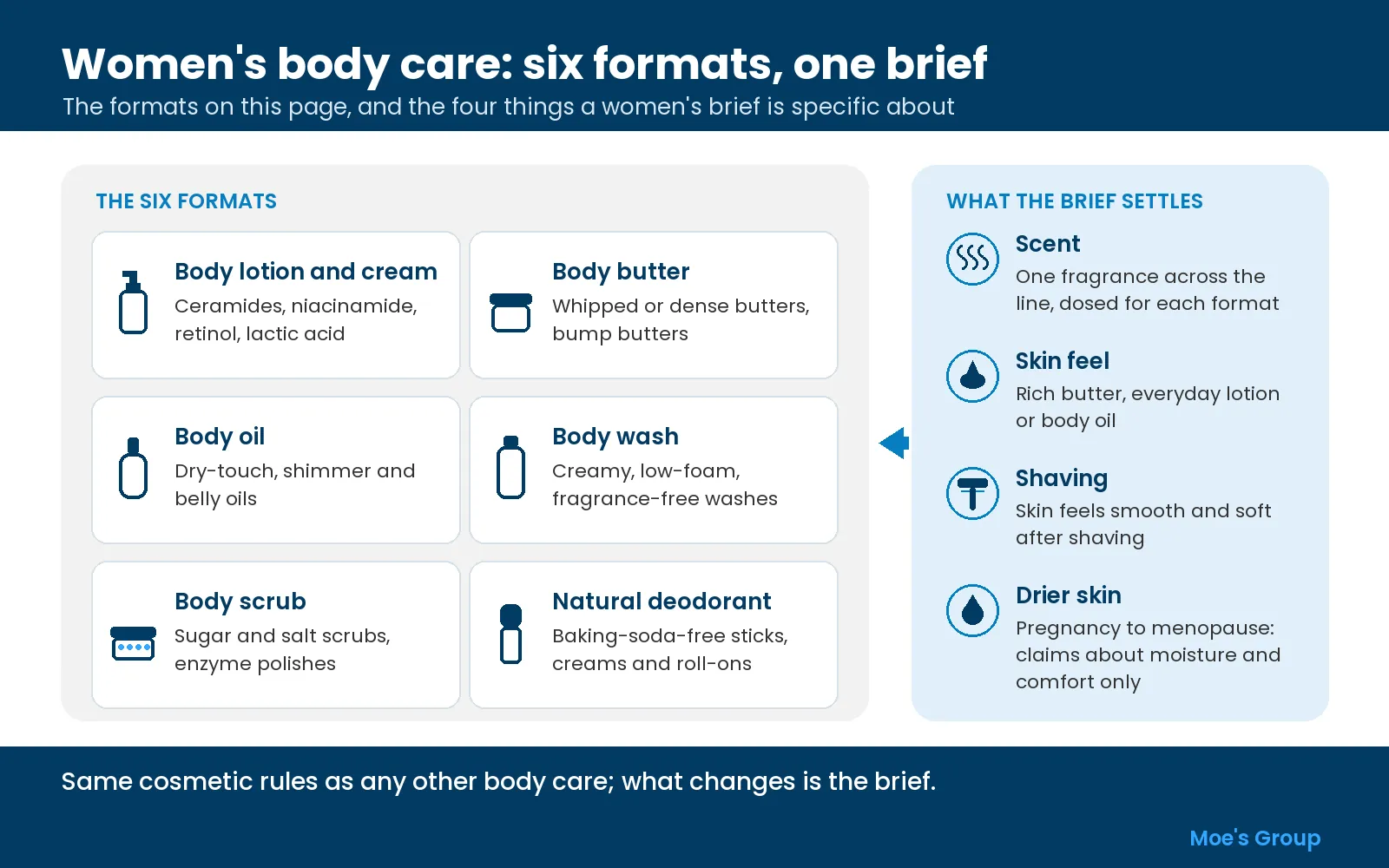
It is a buyer segment, not a separate product type. A women’s body lotion is made on the same lines and under the same cosmetic rules as any other; what changes is the brief. These briefs are specific about scent, skin feel, shaving, and skin that feels drier at life stages from pregnancy to menopause. Private label at Moe’s Group means a custom formula developed to that brief; white label means a ready formula under your own label.
What are women’s body care brands asking for in 2026?
Face-grade actives, scent and texture. Circana reported that US prestige body care sales grew 16% in the first half of 2026, led by cleansers, lotions and deodorants (Retail Dive, August 24, 2026). NielsenIQ’s panel shows US hand and body lotion sales up 16.3% in the 52 weeks to June 13, 2026, and scented body care growing 13.7% against 5.8% for unscented.
US Google searches for retinol body lotion rose from 9,900 a month in October 2025 to a peak of 49,500 in July 2026, and were 27,100 in September. Stretch mark cream holds at 14,800 to 18,100 a month and women’s shave cream at about 8,100; in September, body serum drew 4,400, firming body lotion 2,900 and bump butter 1,000.
How should a brand approach menopause body care?
As a body care product for skin that feels drier or more sensitive, with claims about moisture and comfort only. Dove launched a perimenopause and menopause wash, cleansing oil and balm range in August 2025, and Sanex launched a Derma Menopause shower cream and antiperspirant in June 2026 (Industries Cosmetiques). Search demand is smaller than the launches suggest. US Google searches for menopause skincare ran at a median of about 800 a month in the year to September 2026 (590 in September); menopause body lotion drew about 30.
In practice: richer creams and oils, fragrance-free versions, ceramides, glycerin and shea butter. Claims about hot flashes, hormones or symptom relief are drug claims and stay off the label.
Can a body butter or oil claim to help with stretch marks?
No. A claim to prevent, reduce or remove stretch marks is a drug claim; FDA cited a body butter for “reducing stretch marks” in a 2017 warning letter to Aegeia Skin Care. A bump butter or belly oil can say it moisturizes and softens skin as it stretches. “Pregnancy-safe” isn’t defined in US law, but like any label claim it must be truthful and backed by evidence, so a brand that uses it needs a safety assessment covering that use; many leave retinoids out of these formulas.
Shaving and bikini-line care: what can you make and say?
Body lotions and oils for after shaving, including AHA exfoliating lotions, for external use on legs and the bikini line. Ask us about shave creams and gels before you brief one. US Google searches for ingrown hair serum typically run about 3,600 a month. The label can say skin feels smooth and soft after shaving; preventing ingrown hairs or treating razor bumps are condition claims. A glycolic or lactic acid leave-on should also carry the sunburn alert FDA recommends for AHA products.
Which rules apply before a women’s body care product ships?
Under MoCRA, the brand named on the label is the responsible person. It lists each product with FDA unless exempt as a small business, keeps safety substantiation records and reports serious adverse events within 15 business days; see who files with the FDA for private label cosmetics. Moe’s Group’s facility is FDA-registered; registration is not approval.
California adds its own bans. AB 2762 has prohibited a list of intentionally added ingredients in cosmetics, including formaldehyde, mercury and isobutylparaben, since January 1, 2025, and AB 2771 banned intentionally added PFAS from the same date. MoCRA directs FDA to set which fragrance allergens must be named on labels; as of October 2026 FDA had not proposed that rule (its July 2026 agenda aims for November 2026), so leave back-label space.
What can a women’s body care product claim?
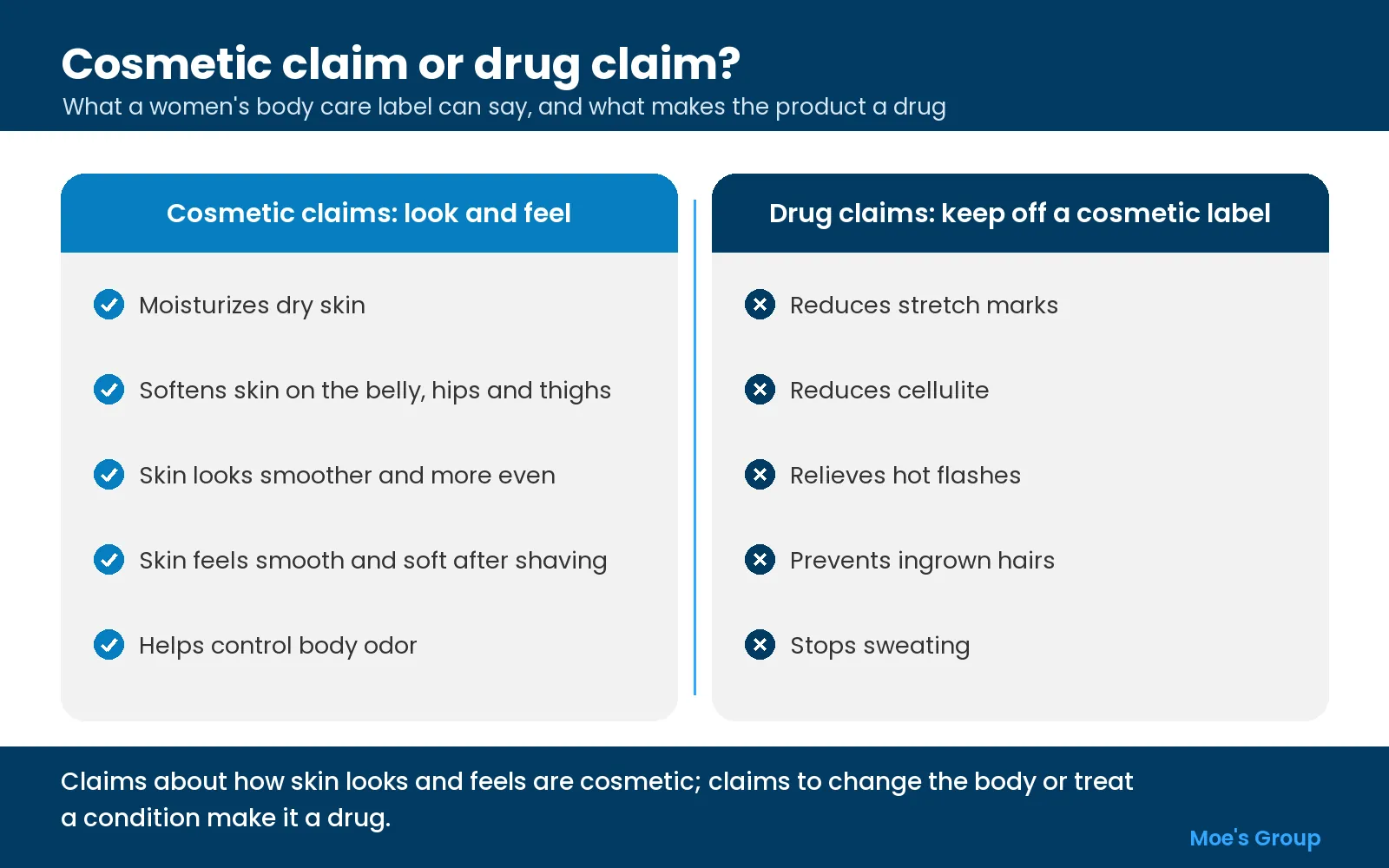
Claims about how skin looks and feels are cosmetic; claims that the product changes the body or treats a condition make it a drug under the Federal Food, Drug, and Cosmetic Act. FDA’s page “Is It a Cosmetic, a Drug, or Both? (Or Is It Soap?)” gives cellulite reduction as an example of a drug claim, and our guide to whether a body product is a cosmetic or a drug works through more cases. The FTC expects every claim to be backed by competent evidence, so test the finished product before label artwork.
| Can say (with substantiation on the finished product) | Cannot say (drug claim or unsupported) |
|---|---|
| Moisturizes dry skin; skin feels softer and smoother | Eczema, psoriasis or itch-relief claims |
| Moisturizes skin that feels drier in midlife | Relieves menopause symptoms or hot flashes; balances hormones |
| Softens and moisturizes skin on the belly, hips and thighs | Prevents, reduces or removes stretch marks |
| Skin looks smoother and more even | Reduces cellulite; burns fat; detoxifies |
| Skin feels smooth and soft after shaving | Prevents ingrown hairs; treats razor bumps |
| Helps control body odor | Stops or reduces sweating (an antiperspirant claim) |
| Fragrance-free, if no fragrance ingredient is added, masking fragrance included | Pregnancy-safe or hypoallergenic, unless the finished product is substantiated for it |
Which women’s body care formats can Moe’s Group make?
The six formats below, with what brands ask for in each and the issue we raise first. See our body lotion, body wash and natural deodorant pages.
| Format | What women’s brands ask for | First issue to settle |
|---|---|---|
| Body lotion and cream | Fragrance-free or scented; ceramides, niacinamide, retinol, lactic acid | Retinol needs airless or opaque packs; FDA recommends a sunburn alert on AHA products |
| Body butter | Whipped or dense butters, bump butters | Stretch-mark claims make it a drug |
| Body oil | Dry-touch, shimmer and belly oils | Shimmer must use FDA-listed color additives |
| Body wash | Creamy, low-foam, fragrance-free washes | External use only |
| Body scrub | Sugar and salt scrubs, enzyme polishes | Plastic microbeads are banned |
| Natural deodorant | Baking-soda-free sticks, creams and roll-ons | Stopping sweat is an OTC drug claim |
Use one fragrance across the line, dosed separately for each format. NielsenIQ names scent layering and mists among the trends behind scented body care growth. FDA doesn’t define fragrance-free or unscented, and notes that some products labelled unscented contain fragrance to mask other smells. California’s AB 496 bans 26 more intentionally added ingredients in cosmetics from January 1, 2027, including the fragrance ingredient lily aldehyde (lilial). Body mists are outside this page; ask us before you brief one.
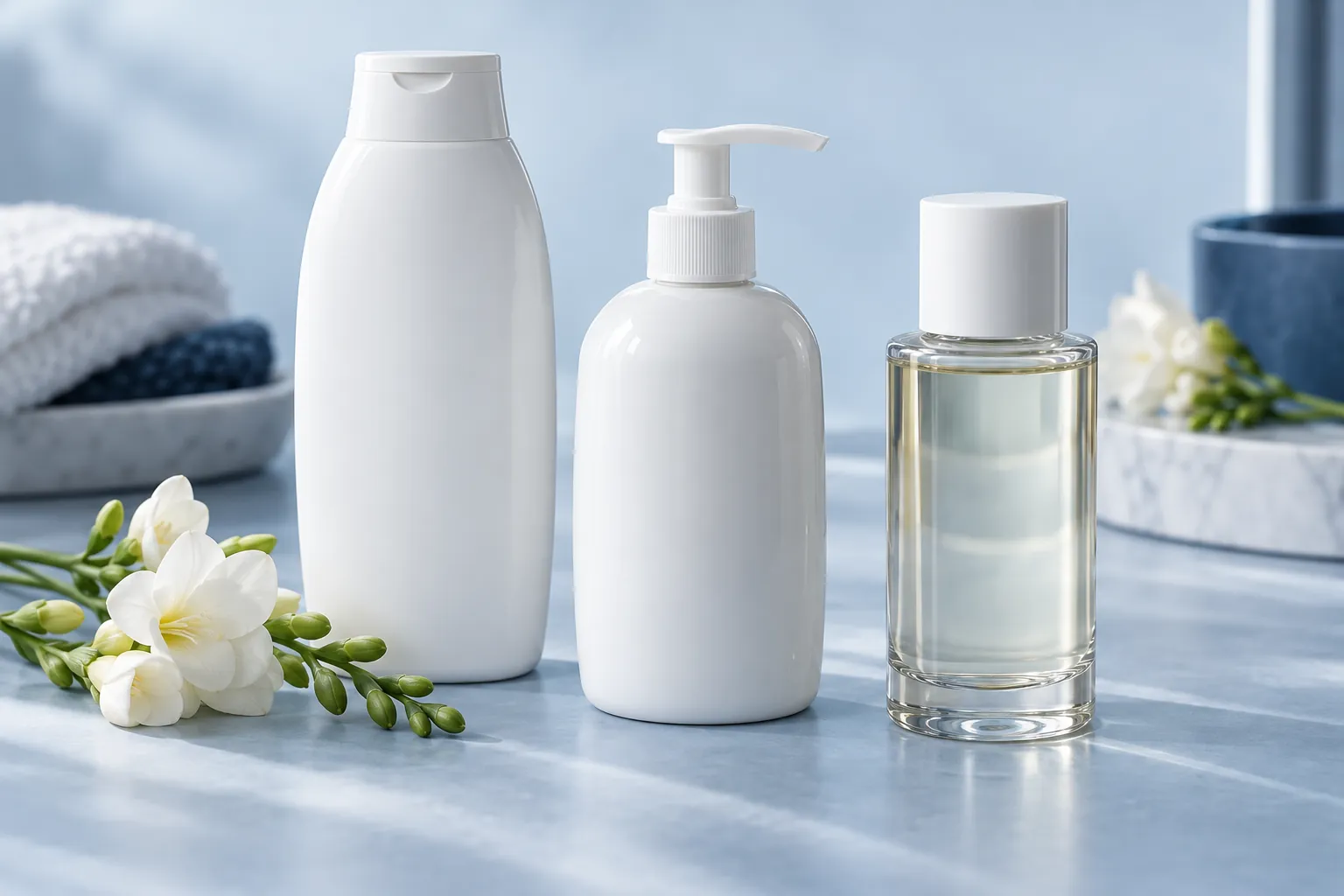
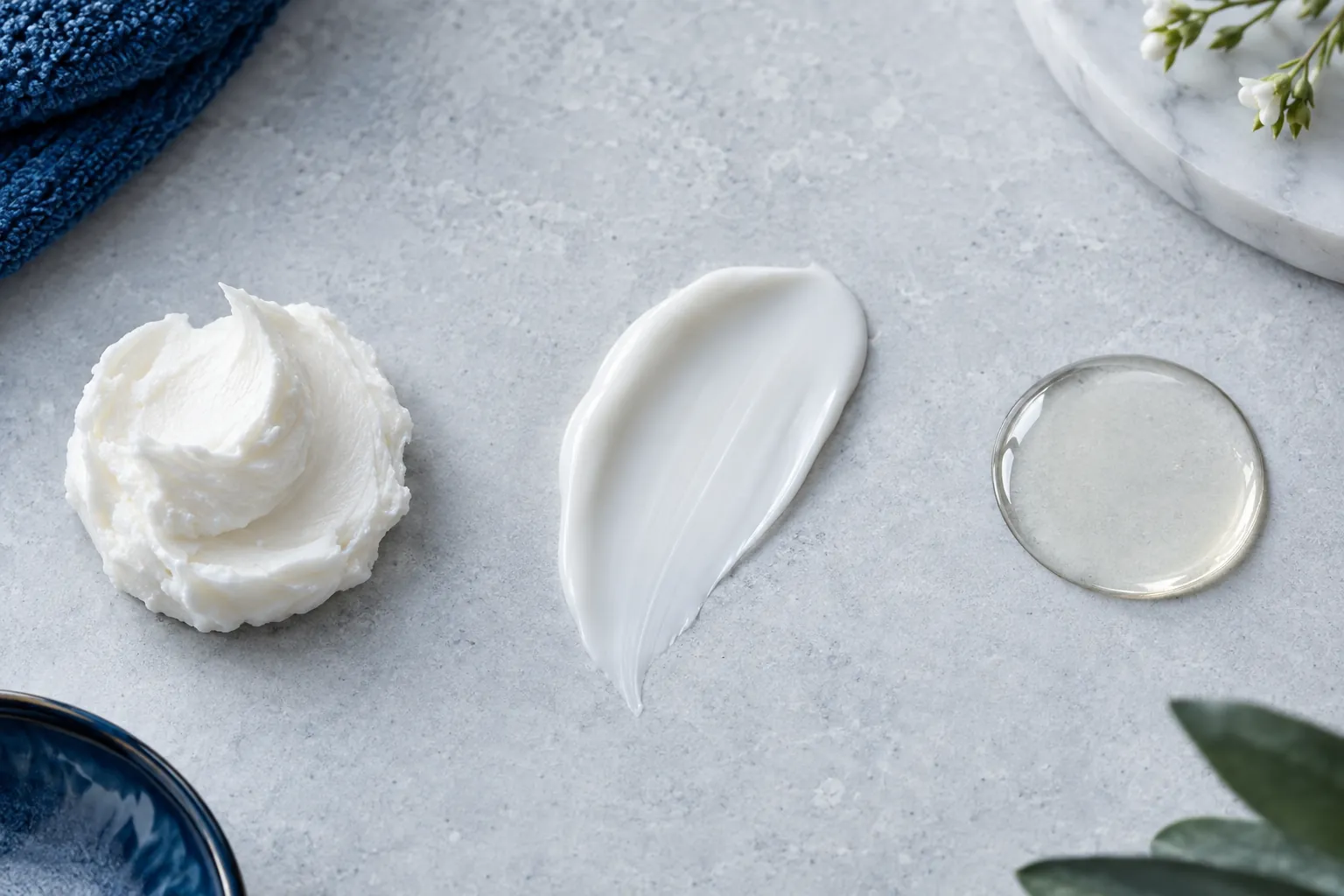
How does a women’s body care project work at Moe’s Group?
It runs in five steps, from brief to filled and labelled product, at our facility in Chatsworth, California.
- Send your brief. Format, scent, texture, the claims you hope to make and the volume, through the Request for Quote form.
- Choose white label or private label. White label from 200 units where a ready formula exists for your format; custom private label from 1,000 units when the scent, actives or texture are yours.
- Formulation. Our in-house chemists develop the formula to your specification, and you approve samples before production.
- Settle the claims and label. Keep claims cosmetic and check the ingredient list against the final formula.
- Production. Filling and labelling run in house in Chatsworth. Lead time depends on the formula and is set out in your quote.

Can Moe’s Group make women’s body care products, and what is the MOQ?
Yes: Moe’s Group formulates, fills and labels private label women’s body care in Chatsworth, California, from 1,000 units for a custom formula, and white label from 200 units where a ready formula exists. Lead time depends on the formula and is set out in your quote. The facility has capacity for up to 1,000,000 units a month across skin, hair and body care, which is capacity, not a delivery date. See our private label body care manufacturing page for the full body care range.
Frequently asked questions
What is private label women’s body care?
Body care made to a brand’s own formula for women buyers and sold under the brand’s name. The same cosmetic rules apply as to any body care product.
Can a body lotion be marketed for menopause?
Yes, if the claims stay cosmetic, such as moisturizing skin that feels drier in midlife. Claims to relieve hot flashes, balance hormones or treat menopause symptoms make the product a drug.
Can a stretch mark cream be sold as a cosmetic?
Only if it doesn’t claim to prevent, reduce or remove stretch marks. It can say it moisturizes and softens skin; FDA has treated stretch-mark reduction claims as drug claims.
Is pregnancy-safe a regulated claim?
It isn’t defined in US law, but like any label claim it must be truthful and backed by evidence, so a brand that uses it needs a safety assessment that covers use in pregnancy.
What is the difference between fragrance-free and unscented?
FDA doesn’t define either term. Use fragrance-free only when no fragrance ingredient is added, masking fragrance included; FDA notes that some unscented products contain fragrance used to mask the smell of other ingredients.
Can an after-shave body lotion claim to prevent ingrown hairs?
No. Preventing ingrown hairs or treating razor bumps are condition claims. A lotion or oil for after shaving can say skin feels smooth and soft, and an AHA leave-on should carry the sunburn alert FDA recommends.
Does a women’s body care product have to be approved by the FDA?
No. FDA does not approve cosmetics, other than color additives, before sale; the brand lists each product unless exempt as a small business, and keeps safety records. Moe’s Group’s facility is FDA-registered, which is not an approval.
What is the minimum order for private label women’s body care?
At Moe’s Group the minimum order is custom private label from 1,000 units; white label from 200 units where a ready formula exists. Lead time depends on the formula and is set out in your quote.
Related pages
- Private label body care manufacturing
- Private label body oil and body glaze manufacturing
- Private label body scrub and body polish manufacturing
- Private label self-tanner manufacturing
- Private label perfume oil and body mist manufacturing
- Private label body serum and active body care manufacturing
- Private label body lotion manufacturing
- Private label body wash manufacturing
- Our California skincare manufacturing facility
- Certifications and FDA facility registration
Sources
- U.S. Food and Drug Administration, “Is It a Cosmetic, a Drug, or Both? (Or Is It Soap?)”, “Modernization of Cosmetics Regulation Act of 2022 (MoCRA)” and “Fragrances in Cosmetics”; Microbead-Free Waters Act of 2015; 21 CFR parts 73 and 74
- U.S. Food and Drug Administration, “Guidance for Industry: Labeling for Cosmetics Containing Alpha Hydroxy Acids” (January 2005)
- U.S. Food and Drug Administration, warning letter to Aegeia Skin Care LLC, February 17, 2017
- Federal Trade Commission, “Health Products Compliance Guidance” (December 2022)
- California AB 2762 (2020), AB 2771 (2022) and AB 496 (2023); summary by Keller and Heckman, October 16, 2023
- ChemLinked, “US FDA Sets November 2026 Timeline for Formaldehyde Ban and Fragrance Allergen Rule,” July 9, 2026
- Retail Dive, Circana first-half 2026 US beauty results, August 24, 2026
- NielsenIQ, “From Insights to Aisles: Unpacking the Future of Skin & Body Care,” August 2026
- NewBeauty, Dove women’s wellness collection, August 4, 2025; Industries Cosmetiques, Sanex Derma Menopause, June 19, 2026
- Google Keyword Planner data via Keywords Everywhere, US, October 2025 to September 2026, pulled October 28, 2026
Start a women’s body care product
Tell us the formats, the scent, the texture and the volume you have in mind, and our chemists will come back with a formulation route and a quote. Prefer to talk it through first? Book a free consultation.